
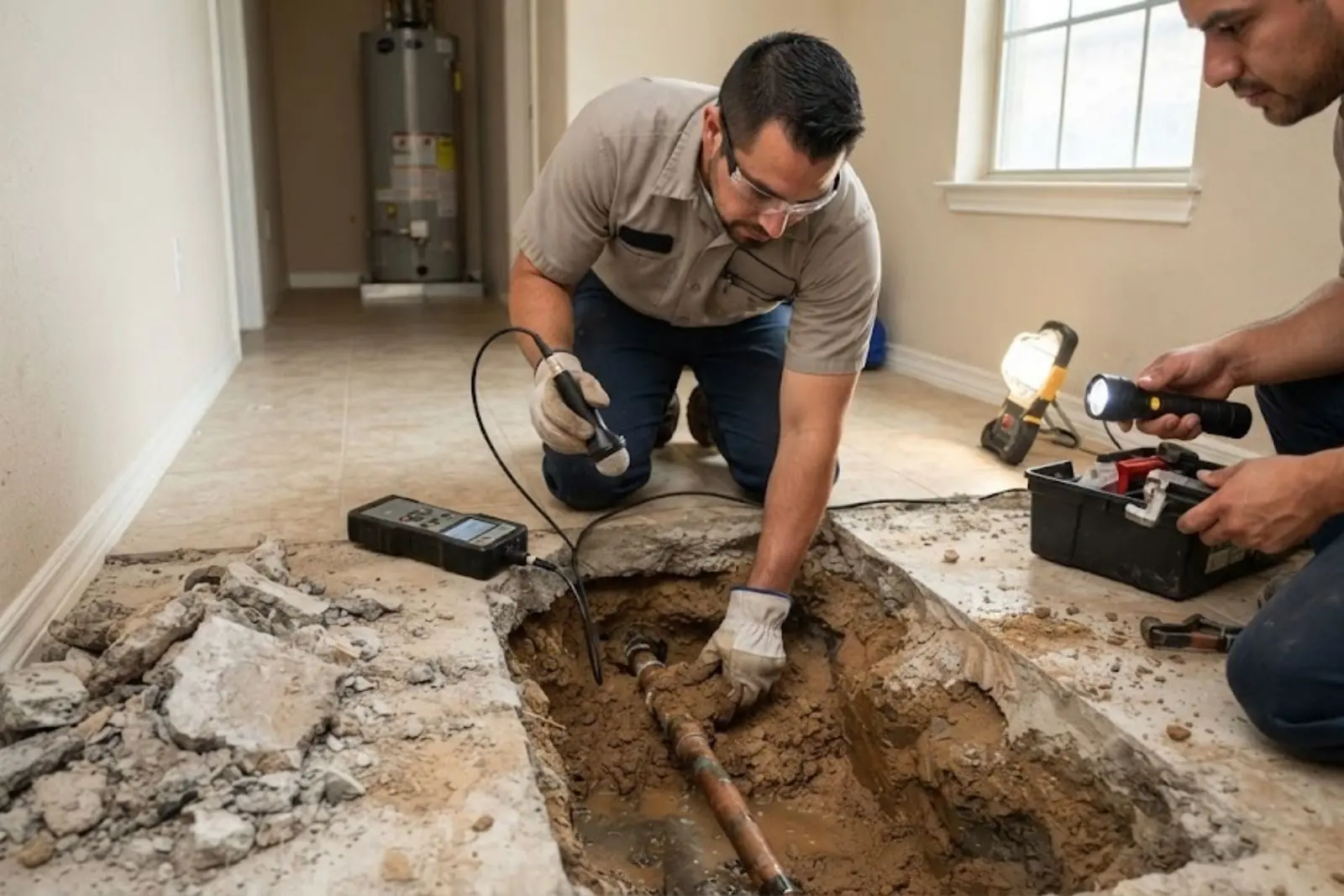
A slab leak is a leak in a water pipe that runs under or inside a concrete foundation. It is an emergency when water is surfacing, the floor feels warm or the meter spins with everything off. Close the main valve and call our 24/7 line. Same-day and after-hours visits are scheduled when a plumber is free.
Slab leak repair means finding the leak, then fixing it by breaking into the slab, rerouting the line through walls or attic, or replacing the pipe section. The right choice depends on the pipe material, how many leaks there are and what sits above the slab.
Slab leak warning signs: act the same day
Warm floor patch
A hot water line leaking under the slab warms the concrete above it.
Sound of running water
A hiss or trickle when every tap is off means water is escaping somewhere.
Wet carpet or lifted flooring
Water rising through the slab can buckle laminate and stain baseboards.
High bill
A jump in the water bill with no change in use is often the first sign.
Shut the main valve and note the meter reading. Check it again in an hour. If the number rose with the main off, the leak is between the meter and the shutoff. If it stayed put, the leak is inside the house and the shutoff stopped it.
Why slab leaks happen
Pipes under a slab sit in contact with concrete and soil. Copper that wears from the outside, soil movement that shifts the slab and abrasion where a pipe rubs a rough edge all cause leaks. Constant high pressure makes every weak spot worse.
Street pressure varies from address to address, and a failed regulator leaves every joint under strain. A pressure test is part of our visit, because lowering the pressure helps new repairs last.
How we locate a slab leak
Isolate and test
We shut sections of the system and watch for pressure loss to narrow the search.
Listen with acoustic gear
Ground microphones pick up the sound of water escaping a pipe under the floor.
Confirm with thermal imaging
An infrared camera shows a warm trace from a hot water leak.
Mark and plan
We mark the spot and show you the route before any concrete is cut.
Want the leak pinpointed?
Call and describe the signs you see.
Your repair options
| Option | How it works | Tradeoff |
|---|---|---|
| Spot repair | Cut the slab at the leak and replace the pipe section | Fastest, but floor finishes are disturbed |
| Reroute | Abandon the leaking line and run new pipe through walls or attic | Avoids concrete work, needs wall access |
| Repiping | Replace the pipe throughout | Best when several leaks appear |
| Epoxy lining | Coat the inside of the pipe | Suited to some conditions only, and not every line qualifies |
Slab leak repair price factors
Insurance may cover the water damage but not always the slab access or the pipe. Ask your insurer before work starts, and keep our written findings.
Codes, permits and licensing
Plumbing in California follows the California Plumbing Code, which is based on the Uniform Plumbing Code (UPC). For slab leak repair, materials, venting and connections should meet that code, and larger jobs may need a permit from the City of Lemon Grove building department.
Plumbing contractors in California hold a C-36 license from the Contractors State License Board, and you can check any license at cslb.ca.gov.
What to do while you wait for a plumber
- Close the main water valve and check whether the meter keeps moving.
- Move rugs and furniture off warm or damp floor areas.
- Keep power strips and appliances away from wet flooring.
- Take photos of damp spots and write down when you first noticed them.
Frequently asked questions about slab leak repair in Lemon Grove
Yes. Call any hour, close the main valve and we schedule the first available plumber with the detection gear.
Do the meter test with the main closed. Movement means the leak is outside the house. No movement means it is inside.
Sometimes. We try to reroute the line when that is practical, and we mark the spot precisely when cutting is needed.
A long-running leak can erode soil under the slab. That is one reason to act fast.
Policies vary. Many cover water damage but not the pipe. Ask your insurer before work starts.