
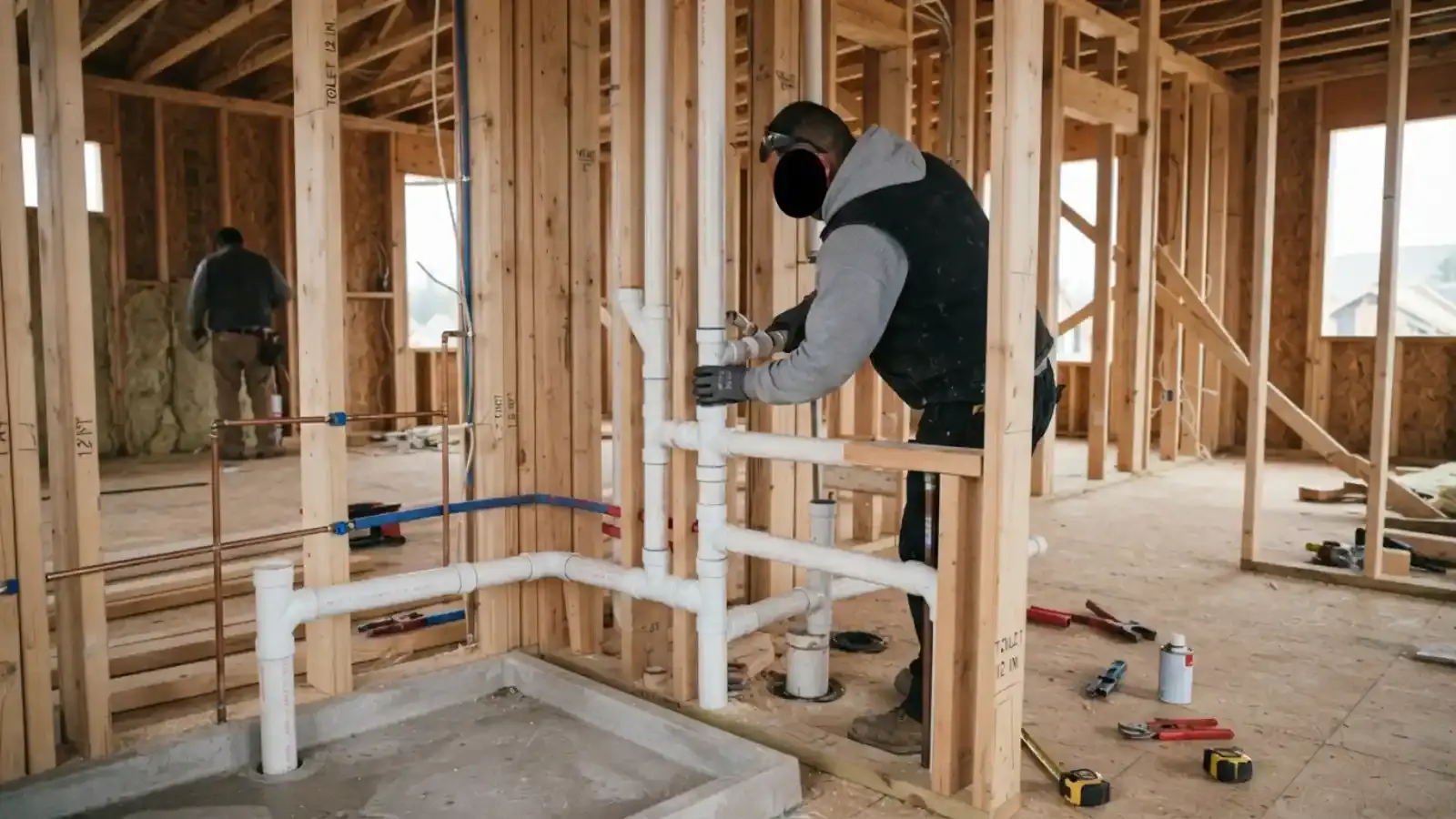
Plumbing installation is the work of placing new water supply lines, drains, vents and fixtures. It covers rough-in before walls close, and trim-out after finishes go in. Typical jobs include a new bathroom, a kitchen remodel, a laundry room, a second dishwasher or an outdoor spigot.
We work from plans or from a walkthrough, and we stay in step with other trades. A good plumbing install is invisible once the walls close, which is why the planning matters.
What a plumbing install includes
Rough-in
Supply lines, drains and vents run in open walls and floors before they are covered.
Fixtures
Sinks, toilets, tubs, showers, faucets and appliances are set and connected.
Shutoffs
Each fixture gets its own shutoff so a repair does not mean closing the house.
Testing
Pressure tests and water tests confirm every joint before walls are closed.
Planning a bathroom or kitchen addition
A new bathroom needs a water supply, a drain and a vent. The drain must slope to the main, and the vent keeps traps from siphoning. Where the new bath sits relative to the existing drain decides how simple the work is.
Moving a kitchen sink across the room costs more than replacing it in place. We explain what a move involves, so you can weigh it against the benefit.
| Project | Main plumbing tasks | Planning point |
|---|---|---|
| New bathroom | Supply, drain, vent, fixtures | Distance to the nearest drain stack |
| Kitchen remodel | Sink, dishwasher, disposal, supply and drain | Whether the sink stays in place |
| Laundry room | Supply valves, standpipe, drain | Drain size and height |
| Accessory dwelling unit | Full supply and drain | Connection to the main and meter |
Have plans to review?
Call and we will schedule a walkthrough.
Permits and inspections
New plumbing work often needs a permit and inspection. The rules depend on the scope of the work and the city. Ask the City of Lemon Grove building department which permits apply to your address.
We build to plumbing code, which in California is based on the Uniform Plumbing Code with state amendments. We schedule inspections where the work requires them and leave the final decisions to the inspector.
How an installation works
Walk the project
We review plans or the site and talk through fixture locations.
Rough-in
We run lines before walls close and test them.
Inspection
Where required, the inspector checks the rough-in.
Trim-out
We set the fixtures, connect them and test the system.
Lemon Grove notes
Lemon Grove homes, from older blocks to newer builds, vary in what is behind the wall. In an older house the first step is often finding out what pipe is there, because tying new copper or PEX into old galvanized steel needs the right transition fittings.
Many Lemon Grove homes are rented, so tenants should ask the owner before any work. The owner decides what is built.
What installation costs
You get the price in writing before we start. Insurance does not cover planned installation work.
Codes, permits and licensing
Work on plumbing installation in California is governed by the California Plumbing Code, a state version of the Uniform Plumbing Code (UPC). Whether a permit applies depends on the scope, so ask the City of Lemon Grove building department or ask us before work begins.
Plumbing contractors in California hold a C-36 license from the Contractors State License Board, and you can check any license at cslb.ca.gov.
Frequently asked questions about plumbing installation in Lemon Grove
Yes. We install fixtures you supply and fit new supply lines and shutoffs. The fixture's own defects are a matter for its maker.
Almost always. Ask the City of Lemon Grove building department for your address.
Often a day or two for a bathroom, depending on layout and access.
Usually, yes. It depends on the supply and the drain near the existing one.
Call the 24/7 line. If a line is cut or leaking during construction, we can respond. See burst pipe repair.