
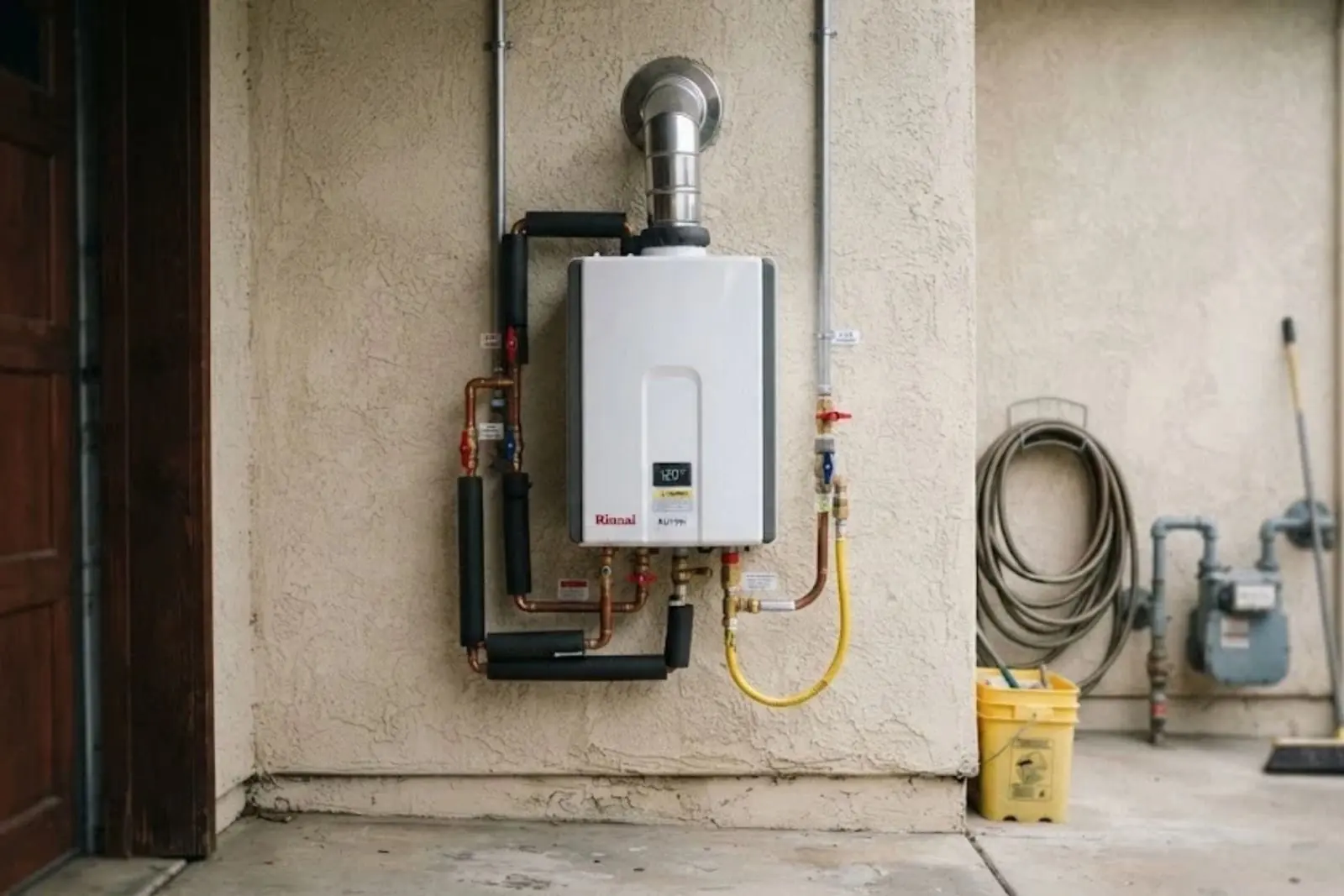
A tankless water heater rental is an arrangement where a company installs a tankless unit and charges a monthly fee instead of a lump sum. The company owns the equipment, and you pay for use. Some programs include maintenance or repair. Others do not.
It can lower the upfront cost, which is the appeal. The tradeoff is that over years, rental payments can total more than the purchase price, and you do not own the unit.
How rental programs work
Sign an agreement
You agree to monthly payments for a term, often several years.
Installation
The company installs the unit and may pay for the permit.
Monthly payments
You pay each month, sometimes added to a utility bill.
End of term
You may renew, buy the unit or have it removed.
What to read in the contract
Term and cost
Total payments over the term, not only the monthly fee.
Maintenance
Does the fee include yearly flushing and repair?
Ownership
Who owns the unit and what happens at the end?
Exit terms
What fees apply if you cancel, move or sell the house?
Want to compare rental with buying?
Call and we will help you sort the numbers.
Buy or rent
| Factor | Rent | Buy |
|---|---|---|
| Upfront cost | Low | Higher |
| Long-term cost | Often higher in total | Often lower in total |
| Maintenance | May be included | Your responsibility |
| Ownership | The company | You |
| Selling the house | Contract may transfer or need payoff | Part of the home |
The installation still matters
Rental or purchase, the install needs the right gas line, venting and drain. A rental company may not check those the way you would. Ask who handles gas line upgrades and what happens if the site is not suitable.
A tankless unit also needs a yearly flush in hard water areas. See our tankless page for what service involves.
Questions to ask before signing
- What is the total cost over the whole term?
- Who pays for repairs and parts?
- What does the company do if the unit fails at night?
- What happens if I sell my house?
- Can I buy the unit early, and at what price?
Other ways to pay for a tankless heater
Rental is one way to spread cost. Purchase with financing is another. Some utilities and programs offer rebates for efficient water heaters. We do not quote any program here, because offers change and eligibility varies. Ask your utility and your installer what is current.
If you own the home and plan to stay, buying often costs less over time. If you may move soon, a rental can reduce the upfront outlay, provided the exit terms are clear.
A simple worksheet
- Monthly rental fee times the number of months in the term.
- Any installation or removal fees.
- Maintenance and repair costs, if not included.
- The purchase price for a comparable unit, installed.
- The cost of buying out the rental at the end of the term.
Put the total of the first four next to the fifth. The comparison is not always obvious until the numbers are on one page.
Check the installation before you sign
A rental company often installs the unit before you see the details. Ask for a written scope that lists the gas line work, the vent route, the condensate drain and the permit. If any part is a charge on top of the monthly fee, you want to know that before you agree.
Ask whether the installer is a licensed contractor, and look up the license at cslb.ca.gov. A program that cannot say who installs the unit is a program to question.
What to do if the unit stops working
Know the number to call and the response promise in writing. A rental that leaves you without hot water for days is not a bargain. If the program does not cover repairs at night, a local plumber can look at the unit, though the owner of the unit may have to authorize the work.
Codes and licensing to know about
Plumbing in California is governed by the California Plumbing Code, which is based on the Uniform Plumbing Code (UPC). Whether a project like this needs a permit depends on the scope, so ask the City of Lemon Grove building department before you start. Contractors hold a C-36 plumbing license from the Contractors State License Board, which you can verify at cslb.ca.gov.
Plumbing in Lemon Grove: local notes
If you own a Lemon Grove home, a rental agreement can follow the house when you sell. Ask any buyer's agent how a lease on the heater would be handled, and read the transfer terms in the contract.
If you rent your home, the heater is the owner's decision. Nearly half of Lemon Grove homes are rented, and a landlord might choose a leased unit. You are not responsible for the contract, but you should know who to call when it fails.
Frequently asked questions
Upfront, yes. Over time, often no.
Some do. Read the contract.
Many programs allow it, at a price set in the contract.
The program's number if repairs are included. We can help with other service.
That depends on the contract. Some transfer to the buyer and some require payoff. Read the transfer and exit terms before you sign.