
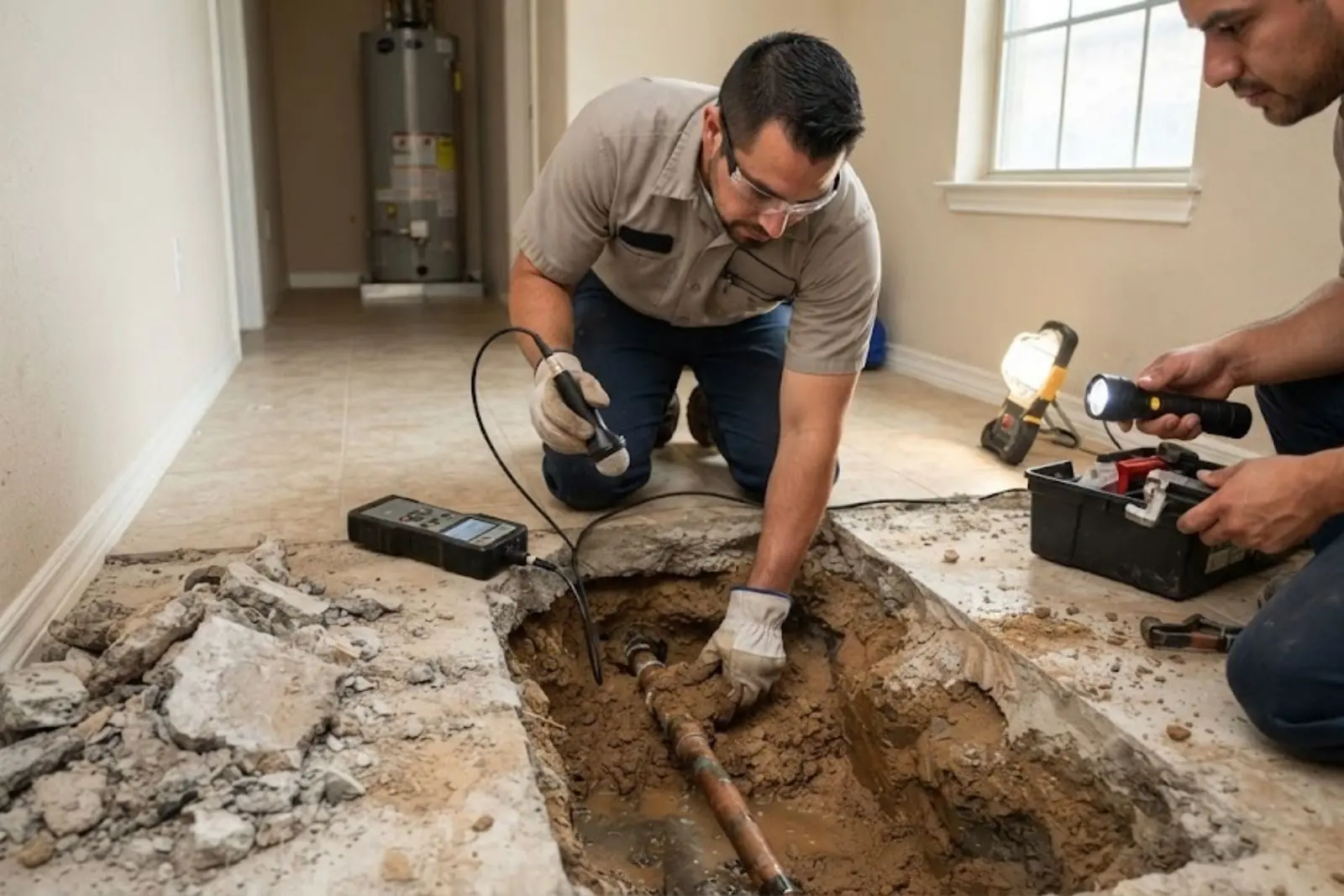
A slab leak is a leak in a water line that runs under or through a concrete slab foundation. Because the pipe is buried, the leak shows up as other symptoms: a warm spot on the floor, the sound of running water, a spike on the water bill or damp flooring.
Not every wet floor is a slab leak. A leaking appliance or a sweating pipe can look similar. The first step is finding out whether water is leaving your house at all.
Check the meter
Turn off every fixture and look at the water meter. If the dial or the leak indicator moves, water is going somewhere. Close the main valve to the house. If the meter stops, the leak is in the house. If it keeps moving, the leak is before the house valve.
Write down the reading, wait an hour with all water off and read it again. A change tells you a leak exists, and that is the moment to call.
Signs of a slab leak
Warm floor
A hot line leaking under the slab warms the concrete.
Running water sound
You hear a hiss or trickle with everything off.
Wet flooring
Carpet damp from below, or laminate that lifts.
Cracks and moisture
New cracks or a musty smell near baseboards.
Hear water with everything off?
Call and a plumber will start with a test.
How the leak is located
A technician isolates sections of the supply system and watches for pressure loss. Acoustic microphones on the floor pick up the sound of escaping water, and an infrared camera shows warm traces from hot lines.
The result is a mark on the floor within a short distance of the leak. That limits how much concrete or wall needs to be opened.
Repair options
| Option | What it means | Best when |
|---|---|---|
| Spot repair | Cut the slab and replace the damaged pipe | One leak in sound pipe |
| Reroute | Run new pipe through the attic or walls and abandon the old line | The pipe is failing or access is difficult |
| Repipe | Replace all supply lines | Several leaks or old pipe |
| Epoxy lining | Coat inside the pipe | Certain conditions only |
Each choice has a different effect on floors and walls. A reroute avoids concrete but opens walls. A spot repair opens the floor. We explain what each means for your finishes before you choose. See our slab leak repair page for how we handle it.
Do not wait
A slow slab leak can erode soil under the slab and raise bills month after month. If you suspect one, act. The sooner it is found, the smaller the repair.
Preparing for a slab leak repair
- Clear the area above the leak of furniture and rugs.
- Plan for water to be off for part of a day.
- Keep pets and children away from the work zone.
- Ask what finishes will be disturbed and who restores them.
- Gather any records of past plumbing work.
Insurance steps
Call your insurer before the repair begins and ask what is covered. Take photos of the damage and of the area where the leak was found. Keep the written report from the leak detection visit, since it dates the problem and shows the location.
Watch for moisture afterward
After a repair, the floor and walls near the leak may stay damp for days. Watch for musty smells, spots of discoloration and lifting finishes. If any persist, mention it to us and to a restoration professional, since lingering moisture can lead to mold.
Why pressure and water chemistry matter
Pipes under slabs live in a harsh spot. They are in contact with concrete and soil, and any small defect has years to grow. High water pressure speeds the damage, which is why a pressure test is part of a good slab leak visit.
Water chemistry plays a part too. Copper can pit in some water conditions. Helix Water District publishes an annual water quality report that lists what is in the water it delivers. If pinhole leaks keep appearing, share the report with your plumber.
Rerouting in plain terms
Rerouting abandons the leaking line under the slab and runs a new line through the attic or inside a wall to the same fixture. It avoids cutting concrete, which is messy and costly to patch. The tradeoff is that walls open, and in a house with no attic access, it can be more work than it sounds. We walk the house with you and show the route before you decide.
Codes and licensing to know about
Plumbing in California is governed by the California Plumbing Code, which is based on the Uniform Plumbing Code (UPC). Whether a project like this needs a permit depends on the scope, so ask the City of Lemon Grove building department before you start. Contractors hold a C-36 plumbing license from the Contractors State License Board, which you can verify at cslb.ca.gov.
Plumbing in Lemon Grove: local notes
Our service area covers both sides of the Lemon Grove and La Mesa border. La Mesa's population grew from 3,925 in 1940 to over 50,000 by 1980 as suburban streets spread out, so homes from that period are common there. See our La Mesa page for how that shapes the calls we plan for, and our service area for the full map.
Helix Water District supplies both cities. If a leak raises your bill, keep your past statements and the repair invoice, and ask Helix whether it can help.
Frequently asked questions
A long-running leak can erode soil under the slab.
Usually not, though some jobs are noisy and dusty.
Sometimes, by rerouting the line through walls or attic.
Policies vary. Ask your insurer before work starts.
Age matters because pipes wear, but any home with pipes under concrete can have one. A meter test tells you whether to look.