
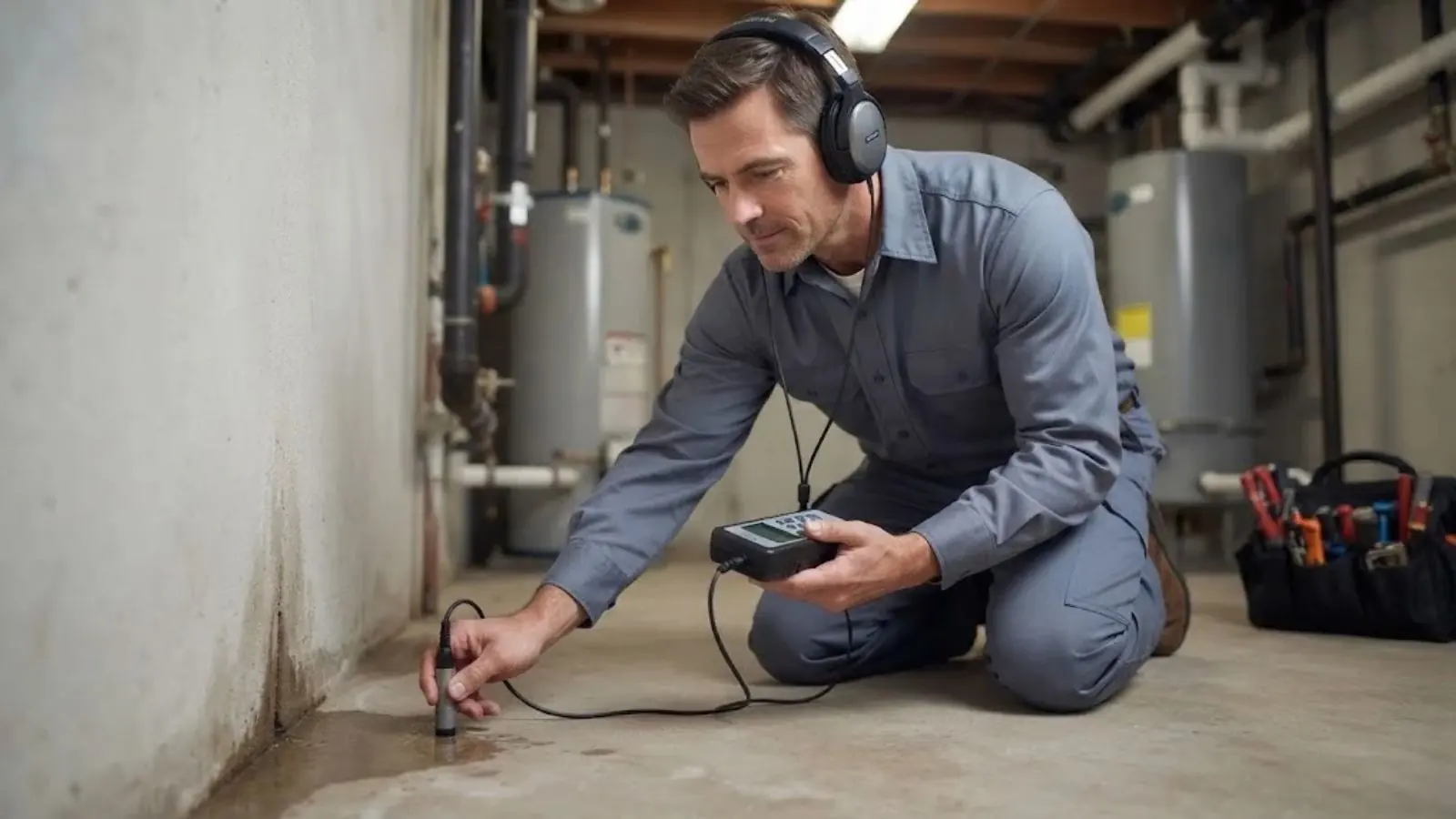
Leak detection is the work of finding where a pipe is leaking without opening walls at random. Providers use pressure tests, acoustic listening devices and infrared cameras, and then mark the spot. The price depends on how many of those steps your home needs.
We do not publish a flat price, because a leak in an open wall and a leak under a finished slab are different jobs. Here is how the factors stack up, so you know what a quote should cover.
The factors that set the price
A quote should state what is included. Ask whether the price covers the full search or a set time, and whether you get a written report with the leak location.
Methods and what they find
| Method | Finds | Typical use |
|---|---|---|
| Water meter test | Whether water is leaving the house | First step, quick |
| Pressure test | Which part of the supply system loses pressure | Narrowing the search |
| Acoustic listening | The sound of a leak in pressurized pipe | Slab and wall leaks |
| Thermal imaging | Warm or wet areas | Hot water lines and wet materials |
| Camera inspection | Cracks and joints in drains | Drain and sewer leaks |
Want to know what a leak check involves?
Call and we will walk you through it.
What leak detection does not include
Detection finds the leak. It does not include opening the wall, repairing the pipe or drying out the area. Each is a separate step with its own price. A good provider tells you that up front.
Water damage cleanup is another trade. If a leak has soaked drywall or flooring, you may need a restoration company, and your insurer may be involved.
Insurance and leak detection
Some homeowner policies cover the cost of finding a leak when it has caused covered damage, and some do not. Many policies cover sudden damage but not gradual leaks or the pipe itself. Read your policy or call your agent before you book, and keep the report we give you.
Questions to ask before you book
- Is the price a flat fee, a time block or an estimate?
- Which methods will you use?
- Will I get a written report with the location and photos?
- What does the price not include?
- Is there a charge if the leak is not found?
Three examples of how scope changes the job
Meter shows a leak, house is small
A short test sequence and a quick acoustic check may find the leak within an hour or two.
Warm floor in a larger home
More isolation steps and thermal work. The search covers more pipe.
Stain on a ceiling
The leak may be from a pipe above or from a roof or a fixture. Moisture mapping helps decide.
Rising bill, no visible signs
Testing each branch takes time. The leak could be in the yard, the slab or the walls.
How to prepare for the visit
- Know where the main shutoff and the water meter are.
- Clear access to the water heater, under sinks and to cleanouts.
- Gather the last few water bills.
- Make a note of where you see stains, hear noises or feel warm floors.
- Tell the technician what you have already tried.
Preparation shortens the visit. The more the technician knows at the start, the less time is spent on tests that do not apply.
Checks you can do yourself first
Look under every sink and around every toilet for moisture. Check the water heater for drips at the base and at the relief valve pipe. Read the meter before bed and again in the morning with no water used overnight. A change means a leak. If everything looks dry and the meter does not move, the extra water use may be a running toilet or an irrigation system instead.
Codes and licensing to know about
Plumbing in California is governed by the California Plumbing Code, which is based on the Uniform Plumbing Code (UPC). Whether a project like this needs a permit depends on the scope, so ask the City of Lemon Grove building department before you start. Contractors hold a C-36 plumbing license from the Contractors State License Board, which you can verify at cslb.ca.gov.
Plumbing in Lemon Grove: local notes
Helix Water District supplies Lemon Grove and bills for the water that goes through your meter. A hidden leak raises that bill, so keep your past bills and meter readings. We cannot speak for the district's billing policy. Ask Helix directly whether it offers any adjustment after a leak is repaired, and bring the repair invoice.
The first check you can do yourself is the meter test described on our leak detection page. It helps you tell whether the leak is inside the house or on the line before it, and that decides who does the repair.
Frequently asked questions
That depends on the provider. Ask before booking.
You can check the meter and look for signs. Pinpointing usually needs equipment.
A simple case takes an hour or two. A complex house takes longer.
Yes. We give a separate repair price before starting.
Ask Helix directly. We cannot speak for its policies. Bring the invoice that shows when and what was repaired, and your recent bills.