
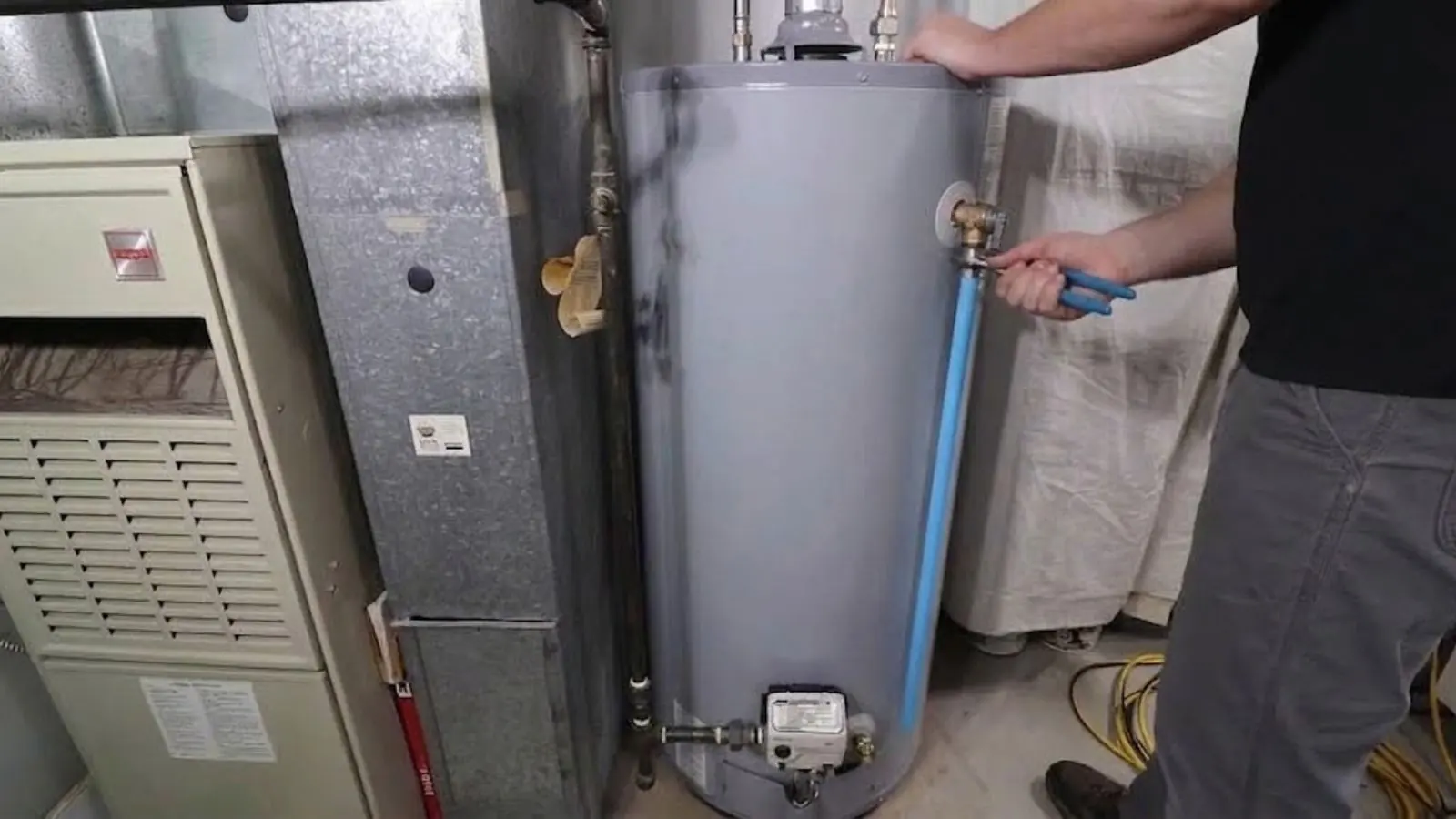
A hybrid heat pump water heater looks like a tall tank, with a fan and a compressor on top. Instead of heating water with a flame or a bare element, it pulls heat from the surrounding air and pushes it into the water, the same way a refrigerator moves heat out of its box. When demand is high, it can switch to electric elements to catch up, which is why it is called hybrid.
Because moving heat takes less energy than making it, these units can use far less electricity than a standard electric tank. That is the appeal, and it is real. The tradeoff is space, airflow and a higher upfront cost, so they suit some homes better than others.
How a hybrid unit heats water
A fan draws room air across a coil filled with refrigerant. The refrigerant warms, a compressor raises its temperature further, and a second coil wrapped around the tank passes that heat into the water. The same air then leaves the unit cooler and drier than it came in.
Most models offer modes. An efficiency mode uses the heat pump only. A hybrid mode adds elements when the tank runs low. A high-demand mode relies on the elements for speed. Choosing the mode is a matter of how your household uses hot water.
| Feature | Standard electric tank | Hybrid heat pump tank |
|---|---|---|
| Heat source | Resistance elements | Heat pump with backup elements |
| Energy use | Higher | Lower in suitable spaces |
| Space needs | Small | Needs open air volume around it |
| Noise | Quiet | A fan and compressor hum |
| Upfront cost | Lower | Higher |
What the unit needs from your home
Air volume
Manufacturers specify a minimum room size or ducting. A tight closet can starve the unit of air.
Electrical supply
Most units need a dedicated 240-volt circuit. Your panel must have room for it.
Condensate drain
The coil produces water as it cools the air. It needs a drain or a pump.
Clearances
Space above and around the unit for airflow and for service.
A garage is the usual spot. The unit cools the garage a little as it runs, which some people like and others do not. If the garage holds a gas furnace or another gas appliance, we check combustion air before adding a fan that moves air.
Want to see if your garage fits a heat pump unit?
Call and tell us the space and your panel.
Where the savings come from, and where they stop
Savings depend on the price of electricity, how much hot water you use and how the unit is set. A household with high use and a spacious garage gains more than a one-person home with light use.
A heat pump unit also recovers more slowly than a gas tank of the same size. If you have a large family and a lot of back-to-back showers, a bigger tank or hybrid mode with elements may be needed. We discuss this during the visit instead of promising a number.
Is a heat pump tank right for you
Probably a good fit
- You have a garage, basement or large utility room.
- Your panel has room for a 240-volt circuit.
- You use a moderate to high amount of hot water.
- You plan to stay in the home for years.
Think twice
- You have only a small closet.
- Your panel is full and an upgrade would be costly.
- You rent and the landlord chooses the equipment.
- You need very fast recovery for many users.
What installation involves
An installation includes setting the unit, running a condensate line, connecting the water lines with shutoffs and a relief valve discharge, and wiring the circuit. A permit may be required, so ask the City of Lemon Grove building department which one applies.
We cover that in water heater installation, and if your current tank has already failed, see water heater replacement for how a swap goes.
Maintenance a heat pump tank needs
A heat pump unit asks a little more of its owner than a plain tank. The air filter or inlet screen should be cleaned a few times a year, because a clogged filter starves the fan and lowers efficiency. The condensate line should be checked so it drains freely, since a blocked line can overflow onto the floor.
The tank itself still needs a yearly flush and an anode rod check, like any storage heater. A plumber can fold all of that into one visit, and the unit's manual lists the schedule.
Questions to ask before you buy
- How much open air volume does this model need, and does my garage meet it?
- What is the noise level at the place where it will sit?
- Does it have a vacation mode and a high-demand mode?
- Who services the heat pump side if the compressor fails?
- What circuit and breaker size does it require, and can my panel supply them?
Write the answers down and compare two or three models. The cheapest unit is not always the quietest, and the quietest is not always the best match for a busy household. A site visit settles most of those questions in an hour.
Codes and licensing to know about
Plumbing in California is governed by the California Plumbing Code, which is based on the Uniform Plumbing Code (UPC). Whether a project like this needs a permit depends on the scope, so ask the City of Lemon Grove building department before you start. Contractors hold a C-36 plumbing license from the Contractors State License Board, which you can verify at cslb.ca.gov.
Plumbing in Lemon Grove: local notes
Lemon Grove covers 3.88 square miles, and its 446-foot elevation puts it in San Diego County's mild coastal climate. The base of the World's Biggest Lemon, at Broadway and Lemon Grove Avenue, reads Best Climate On Earth. A heat pump water heater works best where the air around it is mild, so a Lemon Grove garage is a reasonable place for one. The unit still needs the space, the circuit and the drain described above.
Helix Water District supplies the city. Ask it for its annual water quality report if you want to understand the minerals your tank will see, and ask the City of Lemon Grove building department which permit covers a water heater at your address. We do not assume either.
Frequently asked questions
Yes, they produce condensate. A floor drain or a small pump handles it.
They hum like a window air conditioner at low level. Placement away from bedrooms helps.
Yes, but you will need a 240-volt circuit and space for airflow. We check both.
Most hybrid units fall back to the electric elements, so you still get hot water while the heat pump is repaired.
Often, yes, if the garage has open air volume, a 240-volt circuit and a place for the condensate drain. Lemon Grove's mild climate suits the technology. We check the space during the visit.