
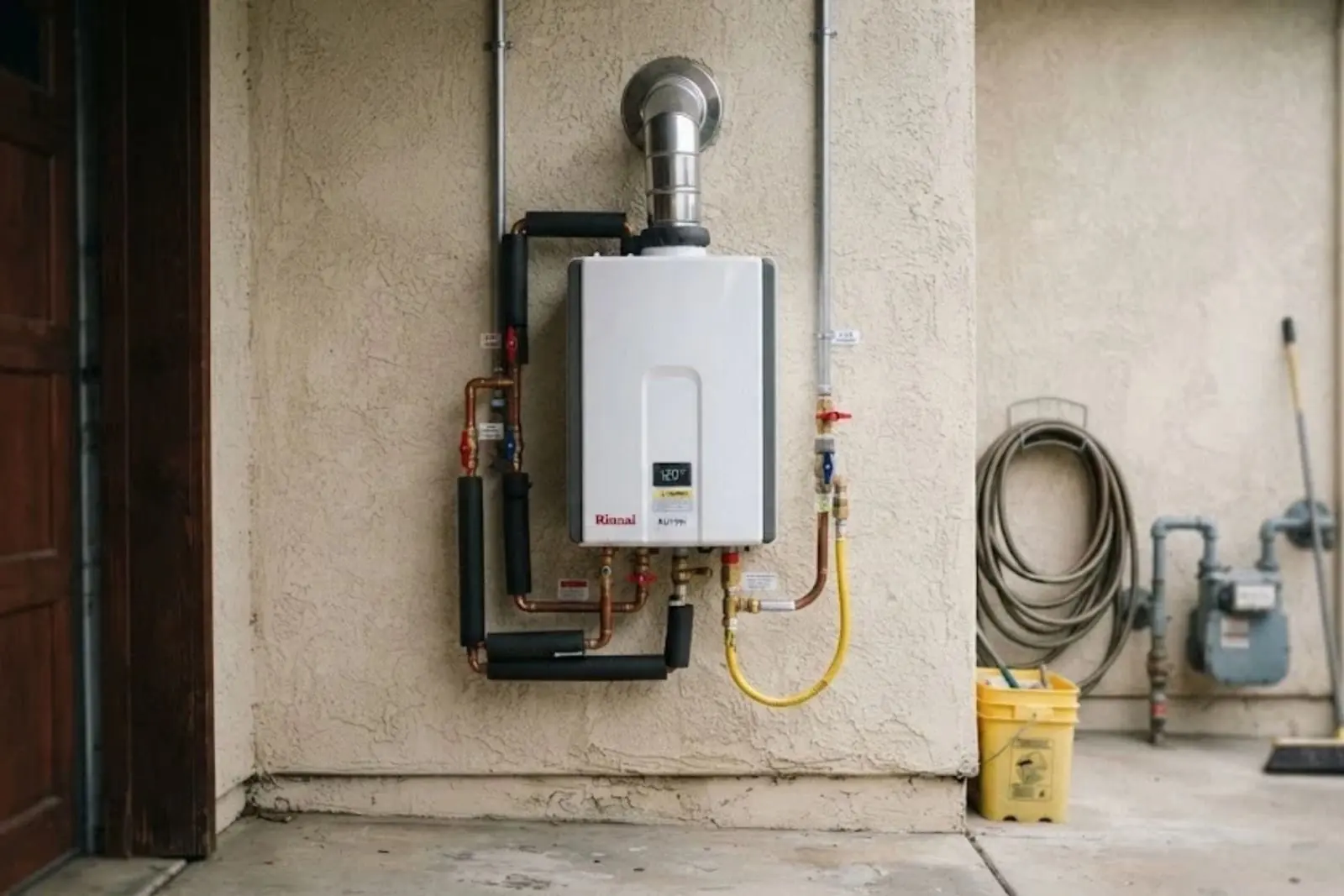
A gas tankless water heater burns natural gas or propane only when hot water is being used. Cold water flows into the unit, a burner fires, and a heat exchanger warms the water as it passes through. There is no stored tank to keep hot, which is why many households switch.
The gas burner is large. A tank water heater might use thirty to forty thousand BTU per hour when it fires. A tankless unit can use several times that, because it has to heat water in seconds. That one fact drives most of what an installation involves.
Check the gas line first
The gas pipe feeding the heater must be sized for the unit's maximum input and for the length of the run. If the existing line is sized for a tank, it may be too small. The fix is usually a larger pipe from the meter or from a point where gas capacity is available.
A gas meter may also need review. A utility can confirm whether the meter serves a higher flow, and we plan the work around what it says.
Gas supply
Pipe size and length decide whether the unit gets enough fuel at full fire.
Venting
Most models need a dedicated vent, often stainless steel or approved plastic, routed to the outside.
Combustion air
Some models draw air from the room, some from outside through a second pipe.
Condensate
High-efficiency models produce acidic condensate that needs a drain and sometimes a neutralizer.
Venting and clearances
Venting is not interchangeable. Each manufacturer lists approved materials, maximum lengths and clearances to windows and combustibles. A vent route that works for one brand may not for another.
Placing the unit on an outside wall shortens the vent and reduces cost. Interior walls mean longer runs and more penetrations. We measure the route before we promise a price.
Want a plan for a gas tankless install?
Call and describe where the unit would go.
The water side
Isolation valves
Service valves with flush ports let you descale the unit each year.
Pressure relief
A relief valve and discharge pipe protect the unit and the home.
Recirculation
Some homes add a pump or a small tank so hot water arrives faster.
Expansion control
Closed systems may need an expansion tank to protect fittings.
Permits and inspection
Gas work typically needs a permit and an inspection. The rules vary by city. Ask the City of Lemon Grove building department which permit applies to your address. We schedule the inspection around the work.
If you ever smell gas, leave the home and call 911 or your gas utility from outside. Do not turn on lights or use a phone inside. Heartland Fire and Rescue serves Lemon Grove, La Mesa and El Cajon.
What affects the cost
How sizing works
Tankless heaters are sized by two numbers. Flow rate, in gallons per minute, tells you how many fixtures can run at once. Temperature rise is the number of degrees the unit adds to incoming water. A larger rise or a larger flow needs a bigger burner.
Add up the fixtures you run together, such as a shower and a kitchen tap, and match that flow to the unit's rating at your needed temperature rise. A unit that is too small gives lukewarm water when two fixtures run. A unit that is too large costs more than it needs to.
Maintenance after installation
- Flush the heat exchanger with a descaling solution about once a year.
- Clean the inlet water filter screen when you flush.
- Check the vent and the condensate drain for blockage.
- Keep the area around the unit clear of storage.
- Have the combustion checked during any service visit.
Power outages and hot water delay
A tankless unit needs electricity for its fan and control board, so it stops when the power goes out unless it has a backup. Some owners add a small battery backup or accept the outage.
Distance also matters. Hot water takes time to travel through a long pipe, and a tankless unit does not shorten that. A recirculation loop or a point-of-use heater near a distant bathroom fixes the wait.
Codes and licensing to know about
Plumbing in California is governed by the California Plumbing Code, which is based on the Uniform Plumbing Code (UPC). Whether a project like this needs a permit depends on the scope, so ask the City of Lemon Grove building department before you start. Contractors hold a C-36 plumbing license from the Contractors State License Board, which you can verify at cslb.ca.gov.
Plumbing in Lemon Grove: local notes
Lemon Grove covers 3.88 square miles about nine miles from downtown San Diego, and its homes range from older houses to newer builds. In an older house, the first question is what the existing gas line is. The meter and the line are the first thing we check.
Gas safety is shared. Heartland Fire and Rescue, which serves Lemon Grove, La Mesa and El Cajon, responds to 911 calls for gas smells. For the permit, ask the City of Lemon Grove building department. We do not assume the answer.
Frequently asked questions
Only if the line is sized for the unit's input. Many tank-era lines are too small.
Yes. The control board and fan run on electricity, so the unit does not work in a power outage unless backed up.
Often one day for a simple swap. Gas line and vent changes add time.
Yes, usually yearly. Isolation valves make it simple.
Leave the building and call 911 or your gas utility from outside. Do not call a plumber first. Once the utility clears the home, we can help with the repair.